my approach
The way I approach therapy shapes everything from the questions I ask to the way I understand the challenges people bring into the room. My hope is that this page helps you get a sense of the values, perspectives, and approaches that guide my work.
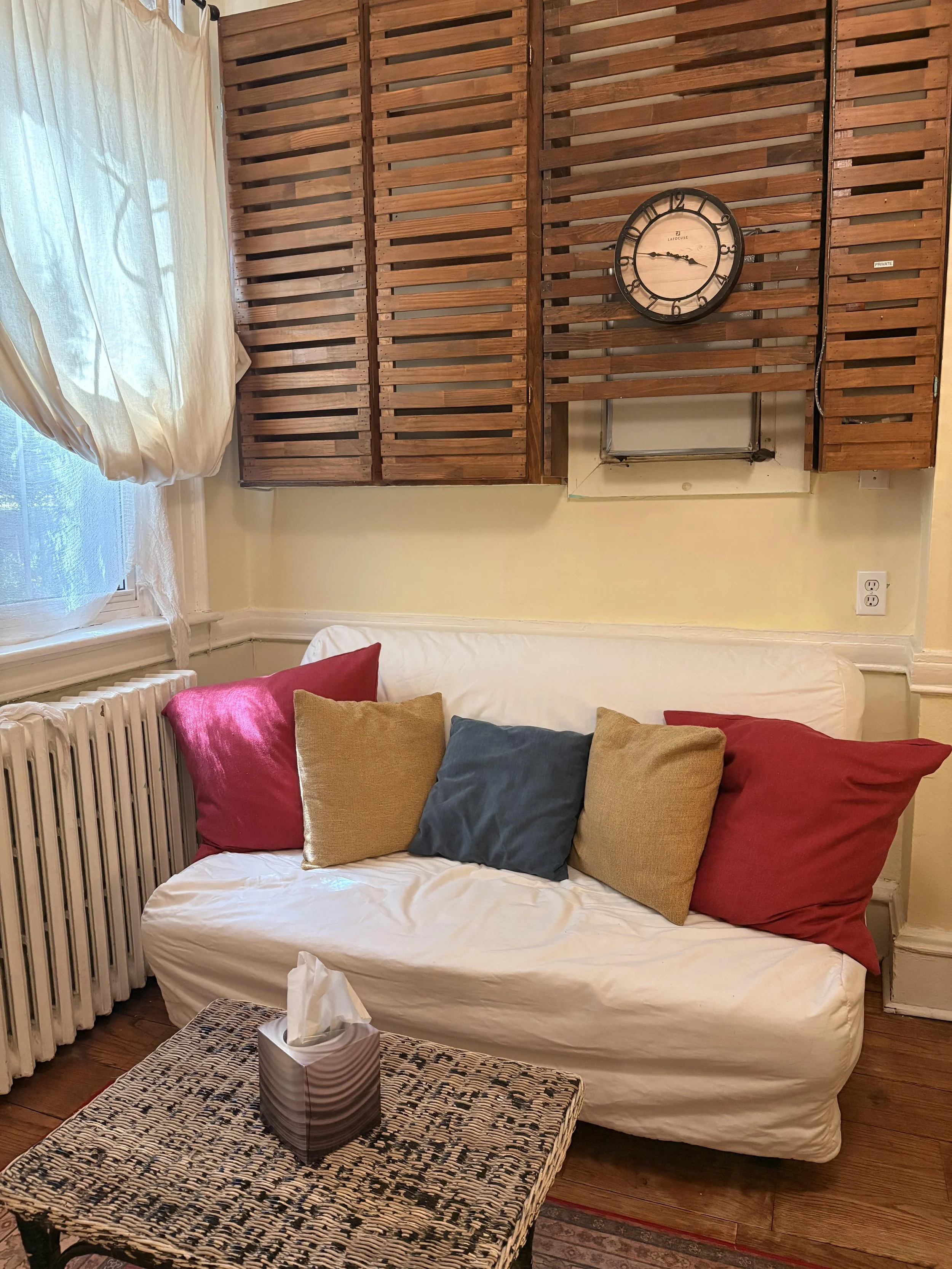
What becomes possible when there’s space for all of you?
Our lives are shaped by the relationships, environments, and systems we move through. Over time, we adapt in ways that help us navigate those experiences, often without realizing how deeply they continue to influence the way we relate to ourselves and others.
For me, therapy means approaching those adaptations with curiosity and compassion rather than judgment.
I work with individuals who often feel disconnected from themselves, overwhelmed by responsibility, caught in cycles they don’t know how to break, or are unsure of how to move forward. Many of the people I support have spent years prioritizing survival, belonging, or the needs of others over their own emotional experience. While these patterns often make sense in context, they can also leave us feeling stuck, exhausted, and disconnected from who we are.
My approach to therapy is relational, experiential, and grounded in the belief that healing happens through new experiences of connection. Rather than focusing on what is “wrong,” I am interested in understanding what happened, how you adapted, and what your experiences may be asking of you now.
My style is warm and collaborative. While I take this work seriously, I don’t believe therapy has to feel overly clinical or formal. I value authenticity, humour, and creating space where you don’t have to carefully manage how you’re showing up. You don’t need to have the right words, the perfect insight, or a polished version of your story when you walk into the room. My hope is that therapy becomes a space where you can show up more fully as yourself and discover what becomes possible from there.
Therapeutic Modalities
-
Relational Psychodynamic Therapy is rooted in the belief that our earliest relationships and experiences shape the way we understand ourselves, others, and the world around us. Together, we explore how past experiences may continue to influence current patterns, while also paying attention to what unfolds within our therapeutic relationship itself.
Rather than simply talking about relationships, therapy becomes an opportunity to experience a different kind of relationship — one grounded in curiosity, authenticity, and care. Through this process, new ways of understanding yourself and relating to others can begin to emerge.
-
Sometimes we understand exactly why we feel the way we do, yet still find ourselves stuck. Somatic Therapy recognizes that sometimes our bodies know more than we do mentally. This form of therapy pays attention to the ways our bodies hold experiences, emotions, and survival responses that cannot be accessed through insight alone. By paying attention to the physical experiences our body has, we create opportunities for healing that is felt, not just spoken.
-
IFS is based on the idea that we all contain different parts of ourselves that developed for important reasons. Some parts may carry pain, fear, or shame, while others work hard to protect us from those experiences. Rather than trying to get rid of or fight these parts, we learn to understand them, build relationships with them, and create a sense of internal harmony and self-compassion.
-
Our emotional experiences and relationships often shape the way we move through the world. This approach helps us to explore how our experiences with connection, safety, and belonging continue to influence our current relationships and sense of self.
-
Our struggles do not exist in isolation from the systems, cultures, and environments we live within. Liberation Psychology recognizes that experiences such as oppression, marginalization, and social expectations can have a profound impact on mental health and well-being. This perspective invites us to understand our challenges as more than individual experiences, but as broader contexts that shape our lives.
This framework allows us to rewrite narratives that have taught us to internalize the ways we have been harmed, excluded, or unsupported. By understanding our experiences within this broader context, we create space for us to step fully into our own sense of autonomy and agency.
You May Recognize Yourself Here
While every person’s story is unique, many of the people I work with share similar experiences, patterns, and questions. You don’t need to relate to everything below, but if you happen to find yourself in one (or more) of these descriptions, it’s possible we may be a good fit for each other!
You find yourself questioning beliefs you once held, carrying shame around identity, or grappling with how to have a relationship with spirituality that feels safe and compassion-led, rather than anxiety inducing.
Religious Trauma & Spirituality
Identity & Belonging
You’re exploring who you are beyond expectations, questioning parts of yourself you’ve been taught to hide, or searching for a place where you can fully belong.
Anxiety & Hypervigilance
Your mind rarely slows down, you feel responsible for everything around you, or it feels difficult to fully relax even when things seem okay.
Life Transitions
You’re navigating a significant change, uncertainty, loss, or new chapter and finding yourself searching for steadier ground.
Relational, Developmental, & Complex Trauma
You often feel the impact of experiences that taught you to stay small, stay alert, stay responsible, or disconnect from yourself entirely in order to make it through.
Relationships & Attachment
You find yourself repeating the same relationship patterns, struggling to trust, fearing rejection, or losing yourself in connection with others.
Intergenerational Patterns
You’re beginning to notice patterns that have been passed down through family, culture, or community, and questioning what you want to carry forward.
Disconnection & Self-Abandonment
You’ve spent so long surviving, adapting, or caring for others that you feel you’ve lost touch with your own needs, desires, or sense of self.
Who Often Finds Their Way Here
I frequently work with LGBTQIA2S+ individuals, women, neurodivergent individuals, helping professionals, caregivers, creatives, eldest daughters, and those navigating questions of identity, spirituality, and belonging.
While these are some of the themes and communities that show up most often in my practice, these are not the only people or presentations that I work with. If your experience isn’t explicitly listed above, but you’re curious about working together, I encourage you to reach out for a free consultation.
You deserve a space where you don’t have to carry everything on your own.
If you’re ready to begin, I would love to hear from you.